The same two words cover a screened, tradition-held process and a stranger with a substance in a rented villa. The difference matters far more than the destination does.
Here is what a psychedelic retreat actually is, where iboga sits among the plant medicines, and what to check before you hand anyone a week of your life.
A retreat is not the ceremony. The ceremony is a night; the retreat is everything built around it — the screening and preparation before, the people holding the room during, and the psychotherapy and integration that follow. Take a group of strangers to a beautiful place, give them a plant, and you have an event. Add the structure and you have a retreat.
The word psychedelic does a lot of work here and hides most of the important differences. Ayahuasca, psilocybin and iboga come from different continents, different lineages and different bodies of practice, and they ask different things of the body. So the useful question is never simply "which retreat" — it is which medicine, held by whom, in which tradition, with what screening at the door.
A psychedelic retreat is an experience, not a medical treatment. It does not replace medical or psychological care, and no serious facilitator will promise you a cure. What can be offered is a carefully held container — the work inside it stays yours.
Ask the healers who lead these nights and they will correct the premise of the question. The plant does not do the healing. Iboga is a vehicle: it carries you to the threshold and no further. What reaches the mind and the soul is the ceremony itself.
The Bwiti tradition, the space held around you, the songs and the music, the rituals passed down through generations, the guidance of the ancestors — that is what makes the crossing possible, and what makes it a safe passage. On its own, a plant is a substance. Held inside a living tradition, by initiated healers, with reverence, it becomes a doorway.
Which is why "what should I take" is the wrong first question. The better one is: who is holding the ceremony, and what were they trained in?
Whatever the medicine, the shape of a serious process is recognisable. Four parts, none of them optional.
Remove any one of the four and what remains is a ceremony with accommodation attached. See how the four stages work in full →
We hold iboga. We do not run ayahuasca or psilocybin retreats, so we are not going to rank them for you — anyone who does is selling something. What we can describe honestly is where iboga is different, because those differences change what a retreat around it has to look like.
It comes from Africa, not the Amazon. Iboga belongs to the Bwiti tradition of Gabon, where it has been used for centuries for initiation, clarity and reconnection. The songs, the ritual and the role of the healer come from that lineage, not from a South American one. What iboga is, and how it differs from ibogaine →
It is one long night, not a series of short ceremonies. Where other retreats may hold several sittings across a week, an iboga retreat is usually built around a single ceremony that asks a great deal of you and is followed by days of rest and therapy. What that night is like, hour by hour →
It affects heart rhythm. This is the practical difference that matters most. Cardiac screening and a recent ECG are not paperwork — they are the reason some people are turned away, and they should make an iboga retreat feel more medical at the gate than you might expect. A place that offers a menu of different medicines in one week is worth a question: who there is initiated in which tradition, and who is watching your heart.
You are choosing people, not a location. Before anything else, check that:
The longer version, with what each check actually protects you from, is here: how to choose a safe iboga retreat →
People arrive at a retreat like this for many reasons, often after other paths have stalled: depression, anxiety, burnout, trauma, compulsive patterns, grief, or a long-running sense of disconnection from themselves. Many come simply wanting clarity about their own life. What people bring to iboga →
We are careful with what we claim, and you should be careful with anyone who is not. Iboga is not a treatment for any condition and does not replace medical or psychological care. Separately from that, research exists and can be read on its own terms: studies from Stanford (Nature Medicine, 2024) and Nature Mental Health (2025) associated ibogaine, under cardiac screening and medical supervision, with significant reductions in symptoms of PTSD, depression and anxiety in veterans. Read what the research actually says →
It is also not for everyone, and that is deliberate. Certain medications and health conditions make iboga dangerous, which is exactly what the screening exists to find. Enrollment is by interview rather than by payment, and if iboga is contraindicated for you, or the timing is wrong, a responsible facilitator says so instead of taking your booking. What preparation involves →
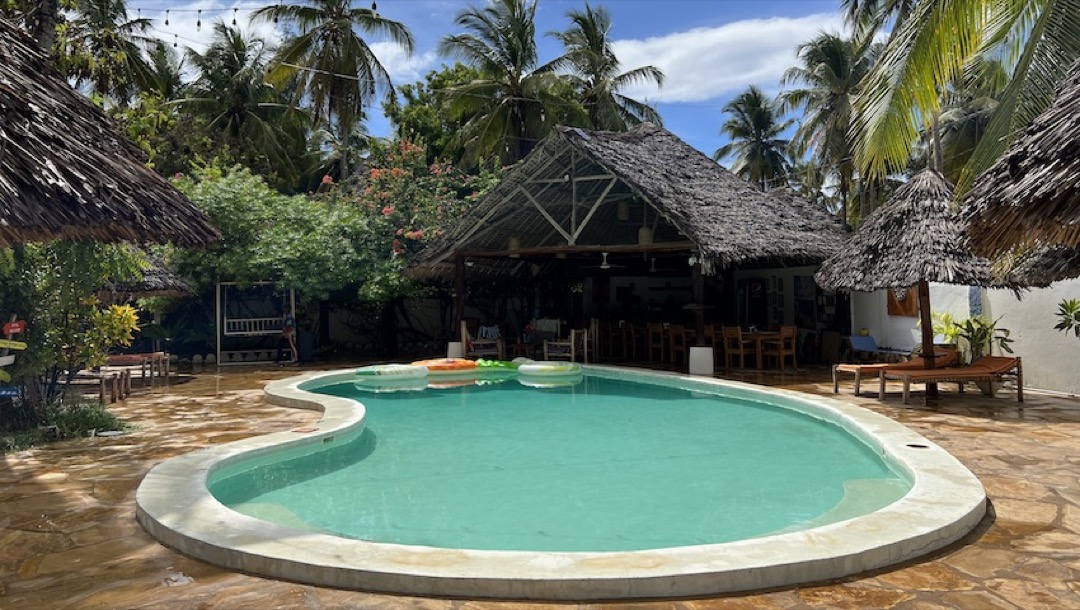
Ours runs for seven nights at Ananda Villa in Zanzibar, a short walk from the Indian Ocean. One iboga ceremony sits at the centre of it. Around that: accommodation, all meals, airport transfers, individual psychotherapy and integration, two excursions and a massage — and a lot of unstructured time, which turns out to be part of the work rather than filler. What is included, and what is not →
Groups are capped at twelve people, held by a team of two initiated Bwiti healers who are also psychotherapists, four assistants and a translator working in English and French. Twelve is not a marketing number: it is roughly the point beyond which nobody can be properly seen. Why the ceremony is held in Africa →
The next edition runs 1–8 November 2026. Every edition includes cardiac screening and a mandatory ECG, a sacred ceremony led by Bwiti healers initiated in Gabon — Tembo (Nzambe Divanga) and Julie (Mudanga), both also hypnotherapists — individual psychotherapy, integration, and a group of no more than twelve. Preparation, ceremony, therapy and integration are treated as one continuous process, from your first intention all the way home.
Nothing here is unusual for a serious retreat. It is simply what the words should mean. If you are comparing places, compare them on these points rather than on photographs. Frequently asked questions →
Dates, price, what is included, who guides you and how to apply for an interview — all the details of the next edition are on the main page.
The 1–8 November 2026 retreat →