Iboga Retreat
Understanding the work

Iboga therapy: what it really is

Iboga therapy is not a drug you take to fix a problem. It is a carefully held process — preparation, an iboga ceremony in the Bwiti tradition, individual psychotherapy and integration — that creates a context for deep inner work.
Here is what it means, how it unfolds, and why it is not for everyone.

See the 1–8 November 2026 retreat →

What "iboga therapy" actually means

The phrase can be misleading. Iboga is a plant medicine from the equatorial forests of Central Africa, used for centuries in the Bwiti tradition of Gabon for initiation, clarity and reconnection. On its own, it is a ceremony — not a therapy.

What turns an iboga ceremony into iboga therapy is everything built around it: the preparation beforehand, the individual psychotherapy, and the integration work afterwards. The medicine opens a door; the therapeutic container is what helps you walk through it and bring something back. Without that container, a ceremony can be a powerful experience that fades. With it, the insights have somewhere to land.

Honest from the start

Iboga is not a magic pill and no serious facilitator will promise you a cure. It creates the conditions for healing — the work is still yours to do.

How iboga therapy works — the full arc

A responsible iboga therapy process moves through four stages, and none of them can be skipped.

1. Preparation

Weeks before the ceremony: a health questionnaire, a recent ECG and cardiac screening, dietary changes, and setting a clear intention. Iboga affects heart rhythm, so this stage is non-negotiable. See how preparation works →

2. The ceremony

The iboga ceremony itself, led by initiated Bwiti facilitators, in a held and supervised space. This is the introspective core of the work — long, demanding, and deeply personal.

3. Psychotherapy

Individual sessions with facilitators who are also trained therapists. What surfaces during the ceremony is met, understood and worked with — not left to interpretation alone.

4. Integration

The insights only become change through integration: reflection, sharing, and support after the ceremony and once you are home. This is where iboga therapy either takes root or slips away.

What people bring to iboga therapy

People come to iboga therapy for many reasons — often after other paths have stalled. Some arrive carrying depression, anxiety or burnout; others come to work with trauma, compulsive patterns, grief, or a sense of disconnection from themselves. Many simply want clarity and a deeper understanding of their own life.

We are careful here, and you should be too: iboga therapy is not a medical treatment and does not replace medical or psychological care. What we can say is that recent research from Stanford (Nature Medicine, 2024) and follow-up studies have associated ibogaine, under cardiac screening and medical supervision, with meaningful reductions in symptoms of PTSD, depression and anxiety. Read what the research actually says →
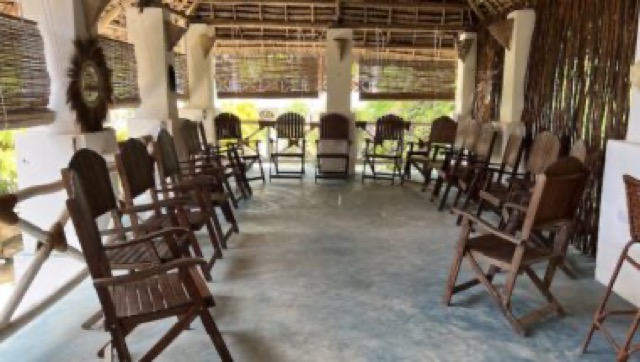
Integration and psychotherapy space at Ananda Villa, Zanzibar
Where the therapy happens — psychotherapy and integration at Ananda Villa, Zanzibar.

Safety comes first — always

Iboga carries real cardiac risks. This is the single most important thing to understand before considering iboga therapy anywhere. A responsible process requires a recent ECG, a health questionnaire, screening for contraindications, and supervision throughout the ceremony.

Certain medications and conditions can be dangerous with iboga — antidepressants (SSRIs), sleeping pills, and some heart or liver conditions among them. Any change to medication is made only with your own doctor. A retreat that accepts everyone, without screening or an interview, is a red flag. How to choose a safe iboga retreat →

Is iboga therapy right for you?

Honestly — not for everyone, and that is by design. Enrollment is by interview, not by payment. The interview protects you and it protects the group. If iboga is contraindicated for your health, or the timing is not right, a responsible facilitator will tell you so rather than take your booking.

How we hold iboga therapy

Our retreat in Zanzibar is built around exactly this container. Every edition includes cardiac screening and a mandatory ECG, an iboga ceremony led by Bwiti healers initiated in Gabon — Tembo (Nzambe Divanga) and Julie (Mudanga), both also hypnotherapists — individual psychotherapy, integration, and groups capped at twelve people so no one is a number. Preparation, ceremony, therapy and integration are treated as one continuous process, from your first intention all the way home.

See the full retreat

Dates, price, what is included, who guides you and how to apply for an interview — all the details of the next edition are on the main page.

The 1–8 November 2026 retreat →
Places limited to 12, by interview.
Continue