Iboga Retreat
Inside the ceremony

The iboga experience: what a ceremony night is really like

An iboga ceremony is not a wellness weekend. It's a long night, held in the Bwiti tradition, that asks something real of you — and tends to give something real back.
Here is what the iboga experience actually involves, hour by hour, without the hype.

See the 1–8 November 2026 retreat →

Before the ceremony begins

By the time you sit down for an iboga ceremony, most of the work has already started. Preparation — screening, an ECG, dietary changes, a clear intention — happens in the weeks before, and by the first night at the retreat you arrive already held: by the group of up to twelve people you have come to know, by facilitators who have read your history, and by a space prepared for exactly this. See how preparation works →

Honest from the start

An iboga ceremony asks for surrender, not comfort. It's long, physically demanding, and often intense before it is anything else. If you're looking for a gentle wellness evening, this isn't it — and no serious facilitator will tell you otherwise.

Inside the ceremony — the Bwiti frame

An iboga ceremony held outside its tradition is just a substance and a room. Held inside the Bwiti tradition — with initiated healers, chant, rhythm and a space consecrated for the work — it becomes something else entirely: a passage. This is why the setting matters as much as the plant itself.

At our retreat, the ceremony is led by two healers initiated into the Bwiti tradition in Gabon — Tembo (Nzambe Divanga) and Julie (Mudanga) — both also trained as psychotherapists. The room is held, not improvised: music and ritual carry the night, and the ancestors are invited in, as they have been for generations of this practice. Read more about the Bwiti tradition →

The arc of the night

An iboga ceremony usually unfolds across a single long night, and it tends to move through recognizable phases — even though every person's experience is their own.

The first hours

The ceremony usually opens in the evening. There is a settling-in period as the medicine takes hold — for many, this brings a quiet kind of focus, sometimes disorientation, before the deeper part of the night begins.

The long middle

This is the part most people underestimate. For hours, you are largely inward-facing: memories, images, old conversations and feelings can surface, often ones you weren't looking for. The body can respond before the mind does — nausea, and sometimes vomiting, is common during an iboga ceremony, and it's held as part of the process, not hidden from you beforehand.

Toward morning

As the night wears on, the intensity tends to soften into something quieter and more reflective. Many participants describe the hours before dawn as the most tender part of the ceremony — less visionary, more settled, closer to rest.

Held, not alone

Even though the ceremony is deeply internal, no one goes through an iboga ceremony unsupervised. Facilitators are present through the night, physically and medically — watching over you, ready to intervene if needed, and simply present as a steady point when the room gets disorienting. This is what a safe passage looks like in practice, not just as a promise.

The group matters too. You're not doing this next to strangers — you've prepared together, eaten together, and will integrate together in the days that follow. This is one of the things worth checking before you choose a retreat →
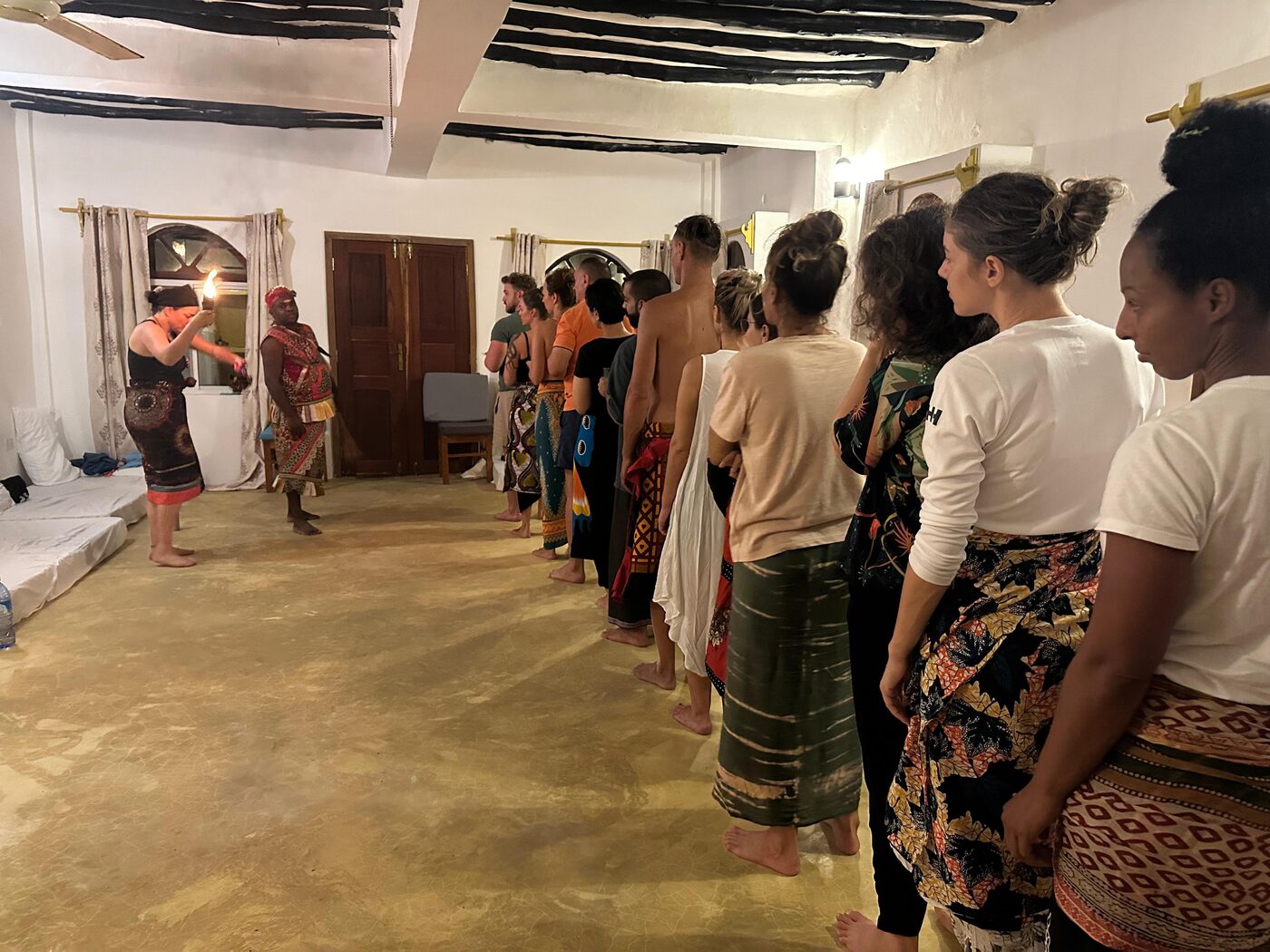
The ceremony space at Ananda Villa, held and prepared before the night begins
The space is held long before the ceremony starts.

What surfaces

Many participants describe an iboga ceremony as a kind of accelerated life review — old grief, patterns learned in childhood, relationships, choices, sometimes material that feels older than their own life. This is often the hardest part to hear about in advance, and the hardest to fully describe afterward.

It's worth saying plainly: this is not always gentle. Many describe an iboga ceremony as the hardest and most clarifying night of their life, in that order. What makes it usable rather than just intense is what happens next — being met by a therapist, not left to make sense of it alone. See how therapy holds what comes up →

The morning after — and the days that follow

Fatigue is normal, and expected. The days immediately after are usually slower and quieter by design — rest, food, the sea nearby, and the first individual psychotherapy sessions, where what surfaced during the night starts to get language.

The ceremony itself is a single night. What it becomes — for better, or for nothing at all — depends almost entirely on what happens after: psychotherapy, integration, and the ordinary weeks once you're home. See what this can help with →

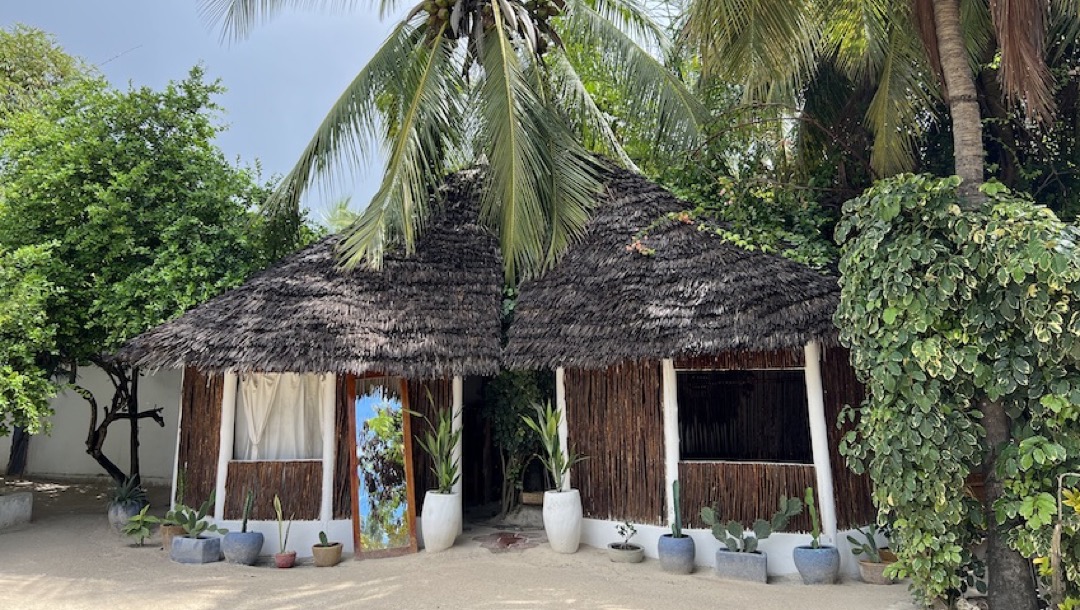
Rest space at Ananda Villa, Zanzibar, used in the days after the ceremony
Where the body rests, in the days after.

Is the iboga experience safe?

Iboga carries real cardiac risk, and this matters more than anything else on this page. A responsible iboga ceremony always sits inside screening — a health questionnaire, a recent ECG, an interview, and supervision throughout the night. Recent research, including Stanford's Nature Medicine study (2024), has looked at ibogaine under exactly these conditions. Read what the research actually says →

If a retreat offers you an iboga ceremony without an interview or screening, that's the clearest warning sign there is. See what to check before you book →

See the full retreat

Dates, price, what's included, who leads the ceremony and how to apply for an interview — all the details of the next edition are on the main page.

The 1–8 November 2026 retreat →
Places limited to 12, by interview.
Continue